
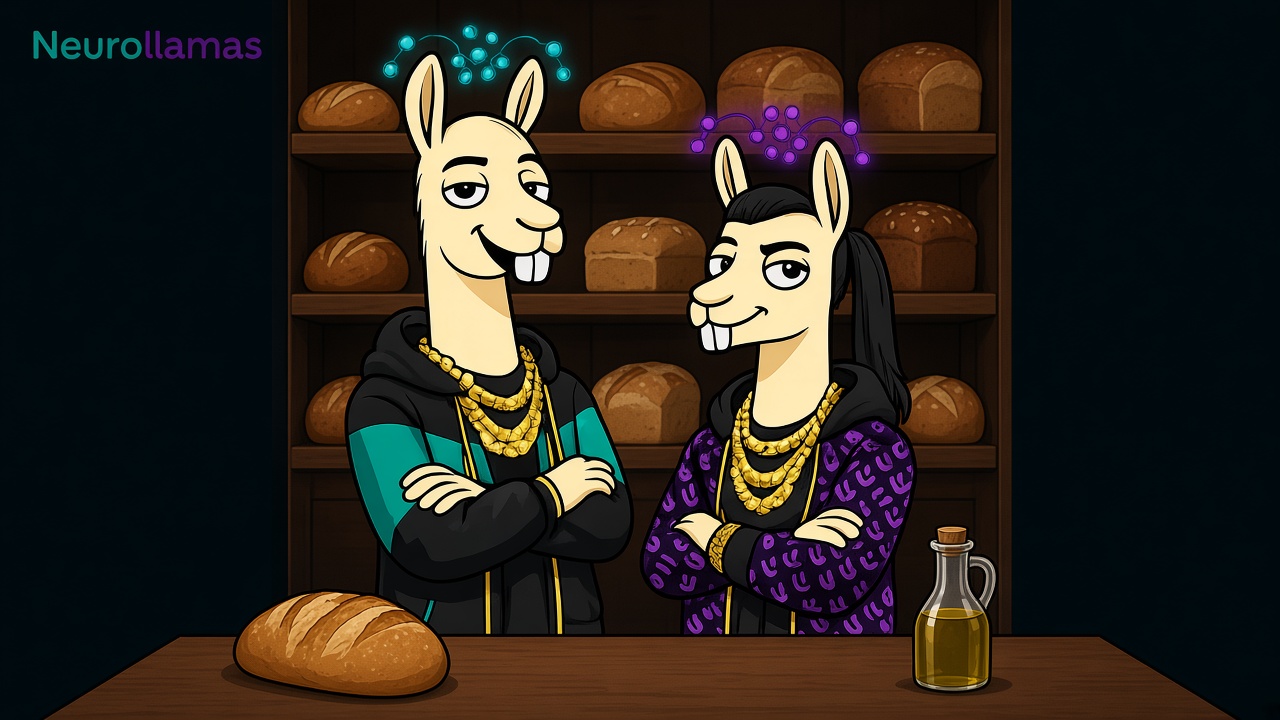
The shop next door is not an influencer, and you are not their sponsor. A useful collab is two products on one table, two names in the caption, and a person who can buy either thing without decoding a friendship. “Love these guys, go follow” is a shoutout. It does not tell anyone what is for sale. A neighbor post works when the objects make sense together and each shop can still be understood if the other shop disappeared tomorrow.
You are still a product shop on the day you share a frame. Neurollamas is an AI marketing studio for product shops and creators. Keep your half of the photo inside the brand you already keep at neurollamas.com, instead of inventing a third brand called “the collab.”
Pick a neighbor for the product, not for the follower count
A good pair is obvious in one sentence. Bread and oil. A cup and the coffee beans they already brew. A tote and the book that fits in it. If you need a paragraph to explain why the objects are in the same photo, the collab is a social favor, not a post.
Ask these before you shoot:
- Can each of you name the other’s SKU, price, and whether it is in stock, without checking mid-caption?
- Are you allowed to show their product? Some wholesale lines and licensed goods are not yours to feature.
- Will their colors wreck the row you just built? If you are in the middle of a color story, wait until that week is over or shoot the collab to live in Stories.
- Is either product something you should not put in a casual scene? Say so. Friendship does not change a claim you are not allowed to make.
Follower count is the wrong sort. A baker with 800 followers who sells out on Saturday is a better partner than a page with a theme and no stock. You are borrowing trust from someone your buyer might already know in town. You are not renting reach.
Agree on the boring parts in writing
A short note, even a message you both keep, prevents the awkward edit:
- Which exact SKUs, and the photos you each approve. No surprise logo overlay later.
- Who posts on the feed, who posts a Story, and whether you will use Instagram’s collab invite so the post can show on both profiles.
- The price rule. If one of you hides prices and the other leads with them, the shared caption has to pick one and the page still has to be clear. See when the price goes in the caption.
- The end. One post and one Story is a collab. A month of reposts is a campaign you did not plan.
- What you will not say. No “best in the city,” no shared discount unless both price lists actually change, no tagging a third shop who did not agree.
If money changes hands, say what it is. A trade of product for a post is still a deal. Do not describe it as a spontaneous discovery. You can be warm and still be accurate: “We trade bread and oil once a month and this is what that looks like on the table.”
Shoot one table, two readable objects
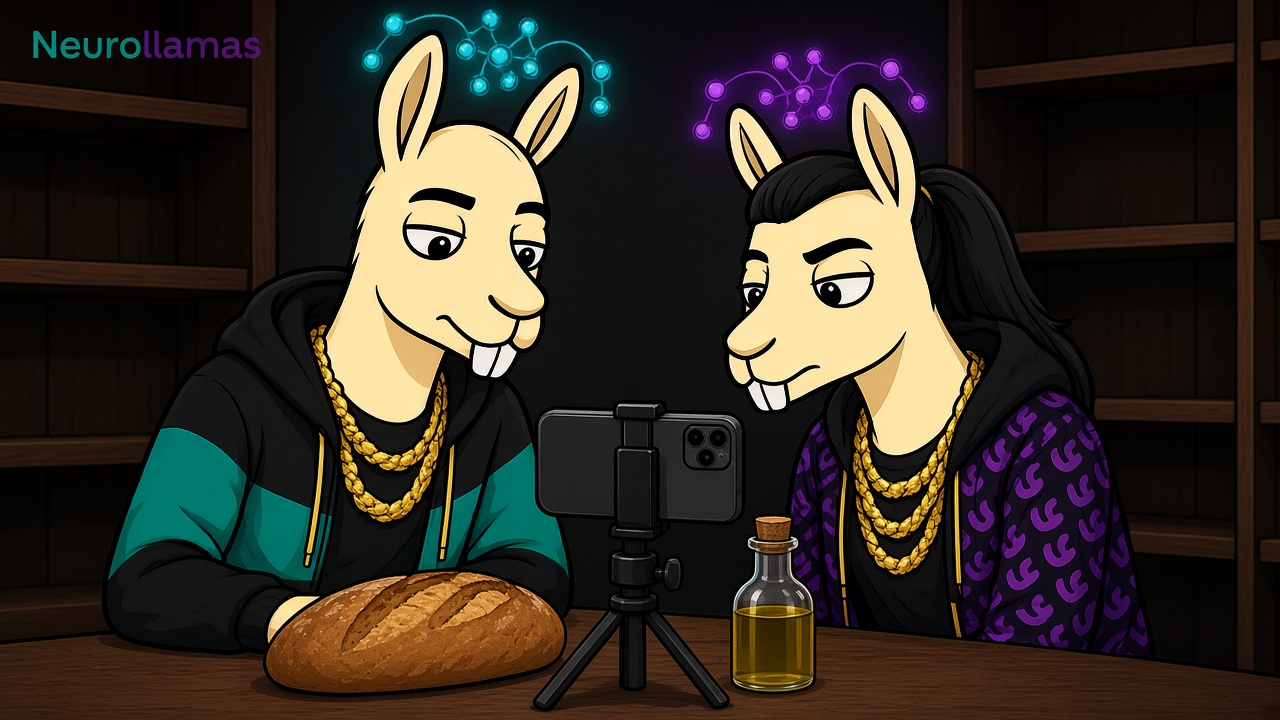
Use the light you already use for your own catalog, from a normal session. The neighbor’s product should be as sharp as yours. A blurry loaf next to a sharp bottle looks like an ad for the bottle, and their customers will notice.
- Both objects fully in frame, labels readable if the labels are real.
- Hands only if the hands are people who agreed. Do not grab a passerby.
- No new combined logo. Your mark and their mark can sit on the products themselves, where they already live.
- A second frame that is only your SKU, for your grid the next day, so the collab is not the only way a stranger meets you.
If you build the scene in image generation, attach both real product photos as references. A generated “similar loaf” is a different baker’s bread. Reject it. The photo rules apply twice, once per brand.
Preview your crop in Instagram UI beside your last eight tiles. Their packaging might be louder than your row. Crop tighter on the objects, or keep the wide shot in Stories and post a calmer still on the feed.
Write a caption a stranger can shop from
The first line names both things and both shops. The second line says who sells which. The third line says how to buy, in the real way, not “DM us.”
“Sourdough from North Bakery and the rosemary oil we press. They sell the loaf at their counter through Saturday. We ship the oil, $18, from the page. This table is the collab. The products are separate.”
Add one practical overlap if it is true: “The oil is the one they put on the toast in the shop.” Do not invent a pairing you have not tasted or a limited bundle you cannot ring up. If you are selling a bundle, both prices and the bundle price go in the caption, and both of you have to be able to fulfill it.
Tag their account in the photo and spell the name in the caption. Tags fail. Spelling survives a screenshot. Do not hand them your customer’s question. If someone asks you about the bread, send them to the baker in one line and stop. Do not quote a menu you do not control.
What each shop posts the next day

The shared photo should not be the only tile either of you publishes that week.
- You: the oil alone, your usual background, a caption that can stand without the bakery.
- Them: the loaf alone, their usual counter, a mention that the oil in yesterday’s photo is yours, with your name spelled.
- Both: a Story with the hours or the ship window that is actually yours. Do not announce their hours from memory.
That second post is what keeps the grid legible, the standard in the grid article. A profile that becomes a tour of other people’s shops stops being a place to buy.
Reply like a shop, using comment replies. Credit them when the question is about their product. Correct the record if a comment merges you into one business. “Two shops, two checkouts” is a fine reply and a useful one.
Stop on the date you agreed
Leave the post up. It is a true photo. Do not keep resharing it every Friday because it did well. A standing collab needs a new photo and a new stock check, not a memory. If their SKU sells out, your caption should not keep sending people to an empty case. Edit the line or add a comment with the truth, the same way you would for your own sold-out post.
Rewrite the caption that tries to be nice
The draft that shows up first is usually this: “So grateful for our friends at North Bakery. Go show them love. Local businesses have to stick together.” It is warm and it does not sell the oil or the bread. Replace it before either of you posts. The rewrite names the loaf, names the oil, says who takes the money for each, and keeps the gratitude to one short clause if you still want it. Gratitude is not the offer. If you cannot remove the sentence “go show them love” without the caption falling apart, you do not have a product post yet. Go back to the table and shoot the objects larger.
Send the rewrite to the other shop before it goes live. They should be able to post the same facts without editing your tone into something you would not say. Read both profiles after the post is up, not only yours. Their grid has a job too. If your bottle logo dominates their photo, offer a tighter crop. A collab that makes one shop look like a sponsor will not get a second one, and it should not. On the brand profile, note the partner, the SKUs, and the date, so a later batch does not regenerate “the collab look” as if it were your permanent set. One table was the idea. Your catalog is still the shop. The neighbor post worked if a stranger could buy the right object from the right person without asking who made what.
The one-page agreement, before anyone shoots
A collab falls apart in the caption when these lines were never written down. One page, shared, is enough. It is not a contract for a lawyer unless money is changing hands beyond the two products. It is a record so neither of you “remembers” a different deal on Friday.
- The two SKUs, by name, and the price each shop actually charges today.
- Who sells which object, and the two links. One checkout is a lie if the money goes to two places.
- Who may crop, filter, or add text. Default: no text on the image. Prices live in the caption, where you can fix them.
- Whether either shop is paying the other, trading product, or doing neither. Write “no fee” if that is the truth. A free collab that one side describes as a paid ad is a problem.
- The date the post goes up, and the date you will stop resharing it.
- What happens if one SKU sells out before that date. The caption gets edited. The photo can stay.
Put your half on the brand profile after you agree, including their name and the end date. A later Reel should not dress your bottle in their set just because the file is still in the folder.
Questions to answer in the caption
Is this one brand or two?
Two. Say both names in the first two lines. “We” is allowed only for the afternoon you spent at the table. It is not allowed for the price, the shipping, or the return.
Whose shipping cutoff applies?
Each shop’s own. If you ship until the 15th and they ship until the 10th, the caption says both, or it says nothing about dates and points each buyer to the right page. One shared deadline that only one of you can keep will be your refund.
Can we use a Collab post so both accounts share the reach?
Yes, if both of you would still post the photo alone. The invite does not fix a vague caption. Write the SKUs first. Then send the invite. A collab label on a shoutout is still a shoutout.
What if their followers ask us for their product?
Reply with their name and their link, the same day. Do not take the order “to be nice” and figure out payment later. Nice is how two shops become one confused receipt. The line you already practiced still works: two shops, two checkouts.