
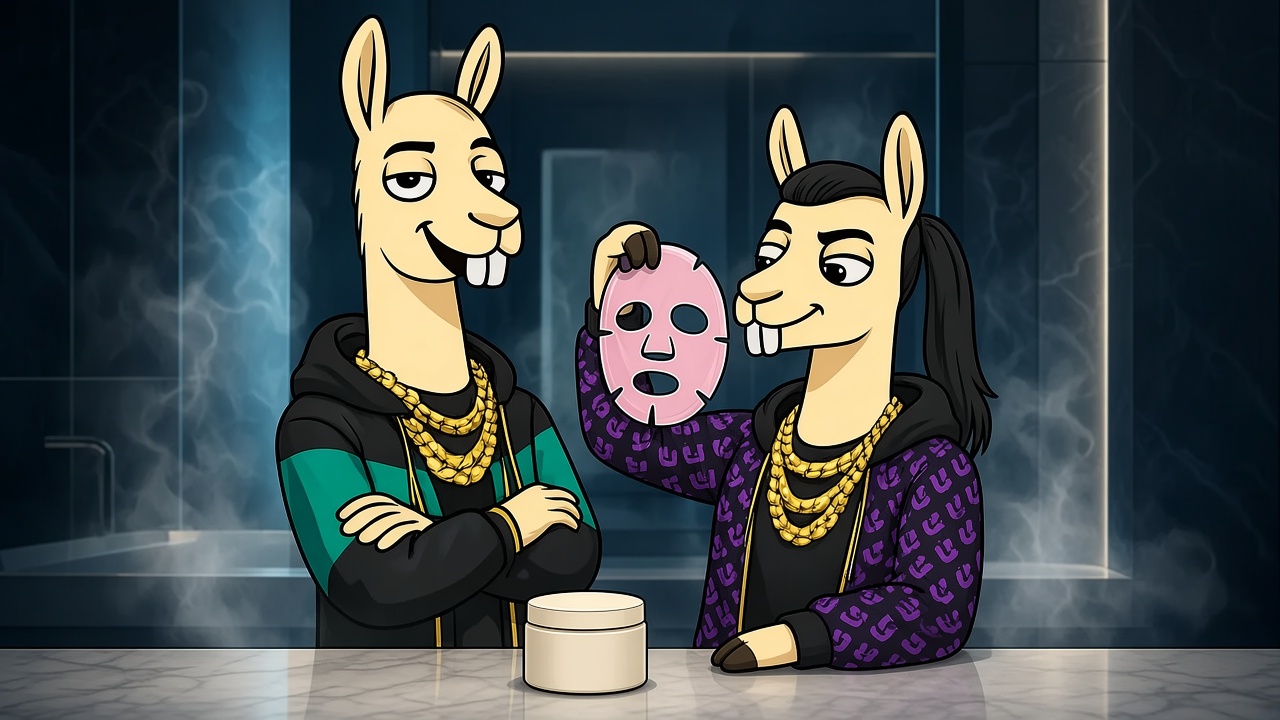
For the seven days of 15 to 21 November 2026, the product that sold the most units on TikTok Shop in the United States was a serum mask. Deviantly Track, reading public sold counters through 21 November 2026 at 04:00 UTC, put NAD+ EGF Firming Serum Mask from the medicube US Store at 104,629 units, listed around $52, with an estimated $5.44 million behind that count. The same window put Zero Pore Pads second at 91,060 units. Those figures are Deviantly’s, from their TikTok Shop US ranking. They are not a forecast for your jar, and they are not a reason to print NAD+ or EGF on a label that does not contain them.
What a small beauty shop can use is the shape of the week. The thing people paid for was a mask you can see, a price a buyer can repeat, and a name that says the job. A sheet, a sheen, a jar. Not a paragraph of borrowed science. Neurollamas is an AI marketing studio for product shops and creators. The photo of your own texture, and the sentence you are allowed to say about it, belong with the brand at neurollamas.com.
Post the texture you can actually show

A US buyer who just watched a mask peel off a face is not looking for your origin story. They are looking for the moment the product becomes obvious: the sheet lifted, the serum sitting on glass, the jar with the lid off. Shoot that, with your formula, in your light.
- One frame of the material. Sheet, cream, oil, or pad. If it does not have a visible body, do not invent a pink sheet to match the week.
- One frame of the container you ship. Same lid, same size, same label as the page. A prettier bottle is a different SKU.
- No claim you cannot put on the carton. Firming, pore, collagen, “clinical,” a percent, a before-and-after. If it is not on the label and you cannot defend it, it does not go in the caption.
- The price in dollars, the way you charge a US checkout. A $28 oil posted next to a $52 mask story without a price looks like it is hiding. The rule for when the number belongs in the caption is in the price post.
Do not stitch medicube’s packaging into your Reel, and do not say “the viral mask” as if the viewer will receive theirs. Dupe language is a returns problem. “Here is what ours looks like on glass, and here is who it is for” is a product post.
Say who it is for in one line
The mask that led the week has a job in the name: firming serum mask. Your name can be plainer. “Night oil for dry skin” is a search. “Glow elixir” is not. Write the line a buyer in the US would type, then use that line as the first sentence of the caption and as the title on the page. The longer version of that naming job is a title someone can search.
A caption that fits this week, and still fits next month:
“This is our night mask. It is a sheet, one use, $24. It is for dry skin that feels tight after a shower. We ship it inside the US. The full ingredient list is on the page, and we do not add ingredients because they are trending.”
Change every number and every noun that is not true. If you do not ship inside the US, say where you do ship, in the same words as the shipping post. A beauty buyer who pays and then learns the box cannot leave your country will not come back for the texture.
What not to copy from the ranking
Seven medicube listings sat in that top 20, including the serum, the pads, a peptide mask, a jelly cream, a body set, a gel mask, and a balm. The lesson is not “launch seven products by Friday.” A shop with one honest mask and a page that matches the photo will take the click that a copied ingredient list loses. Other rows that week were rosemary water, a lash serum, a whitening mouthwash, shapewear, a lantern, a power bank. The feed was not only beauty. If you sell a lantern, do not put a sheet mask in the corner of the photo to borrow the week.
Skip these, even if the audio is everywhere:
- A before-and-after you did not photograph, or a face you do not have a right to use.
- A percent of “pore reduction” you measured on a screenshot.
- “Same as the viral one” as a selling sentence.
- A fake review quote. If a customer said something you can stand behind, the way to use it is in the review post, with their permission and without polishing it into a claim.
Keep the allowed words on the brand profile: the product name, the price, the skin it is for, the words you refuse. A batch of posts should pull from that card. If Content Autopilot writes a caption, it is not allowed to invent a molecule.
Questions a US buyer asks under a mask video
Is this the one from TikTok Shop?
No, unless it is. Say the brand name you actually sell. “Not the mask that led the chart this week. This is ours, and here is the texture.” Send them to your page, not to someone else’s listing.
What is in it?
Link the ingredient list. Do not summarize it into a trending acronym. If they want the science of a specific ingredient, they can read the list. You do not owe a lecture, and you do not get to borrow one.
Will it work on my skin?
Say who you made it for, and say you are not their dermatologist. “Made for dry skin. If you are treating a condition, ask a clinician before you add a new product.” That sentence keeps the click and refuses a promise.
How much, and do you ship here?
Price in USD, ship zone in the same reply. Do not make them ask twice. The photo they tap should already be the container on the product page, with alt text that names the product, not “viral skincare.”
Three posts, then stop dressing as the chart
A US buyer who searches “serum mask” or “sheet mask for dry skin” this week is not asking you to cosplay the number-one listing. They are asking which jar is yours. Three posts cover it. A fourth that repeats the chart will look like you have nothing on the shelf.
- The texture. Sheet on glass, or the drip, with the real container in the same frame or the next one. Caption leads with your name and the price in dollars.
- Who it is for, and who it is not. Dry skin, or acne-prone, or “not for broken skin,” in the words you would say at a counter. No percent.
- The page. A still of the product title on a phone, so the search and the checkout use the same noun. Link that still to the product, not to your profile grid.
Space them across the week of 21 November 2026 and the days just after, while “serum mask” is still a live search, not a history lesson. Then return to the product you were already going to post. If the mask is not your product, do not borrow the search. A lantern shop that captions “serum mask energy” will collect the wrong click and zero orders. The click that counts toward a real day of US traffic is the person who wanted a thing you ship.
Save the allowed caption on the brand profile before you batch the three. If a later week’s chart is a mouthwash, a lantern, or a chain, you already know the move: show your version of the object only if you sell that object, with your price and your ship zone. The chart is a calendar. It is not your formula.
Use the week, then go back to your shelf
Post the texture once while the search is hot, between now and the end of November 2026, and keep the page up after the ranking moves. The click you want is a person in the United States who searched for a serum mask, a sheet mask, or a night mask, and found a shop that shows the real material and the real price. That search does not end when Deviantly publishes next week’s table.
Make the still in the studio from your jar and your approved light, not from a screenshot of the chart leader. If the first frame is the sheet or the drip, hold it. The first frame is the search result. A logo sting is not. When the audio of this week is gone, the jar should still be the same jar.